
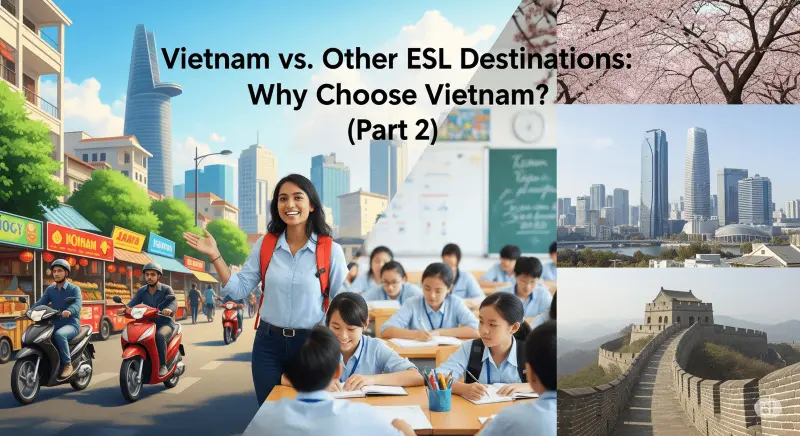
This is Part 2 of our comprehensive 16-part series: “The Complete Guide to Teaching English in Vietnam.” In Part 1, we explored whether teaching in Vietnam is right for you. Now let’s see how Vietnam stacks up against other popular ESL destinations and why it might be your best choice.
When researching where to teach English abroad, you’ve probably come across the usual suspects: Thailand, South Korea, Japan, China, and maybe Taiwan. These destinations dominate the “best countries to teach English” lists, but Vietnam deserves serious consideration – and here’s why it might actually be your best choice.
The Big Picture: Vietnam’s Unique Position
Vietnam sits in a sweet spot that many other ESL destinations have moved away from. It offers the cultural immersion and adventure of Southeast Asia, the growing economy and job security of East Asia, but without the oversaturation or bureaucratic nightmares that plague other popular destinations.
While countries like Thailand are becoming increasingly difficult for new teachers to break into, and places like South Korea require extensive documentation and long waiting periods, Vietnam remains accessible and welcoming to qualified English teachers.
Vietnam vs. Thailand: The Southeast Asia Showdown
Thailand has long been the poster child for teaching English in Southeast Asia, but Vietnam is rapidly becoming the smarter choice.
Cost of Living:
- Thailand: Bangkok rent: $400-800/month, meals: $3-5, beer: $1.50
- Vietnam: Ho Chi Minh City rent: $300-500/month, meals: $1.50-3, beer: $0.75
Vietnam wins on affordability. Your money goes further, and you’ll save more while enjoying a similar lifestyle.
Job Market: Thailand’s ESL market is oversaturated, especially in Bangkok and popular tourist areas. Many schools prefer teachers already in-country, making it harder to secure positions from abroad. Vietnam’s job market is booming with high demand and schools actively recruiting internationally.
Visa Requirements: Thailand has tightened visa requirements significantly. Tourist visa runs are becoming more difficult, and work permit requirements are stricter. Vietnam’s visa process, while still requiring proper documentation, is more straightforward and predictable.
Cultural Experience: Both offer incredible cultural immersion, but Vietnam feels more authentic. Thailand’s popular teaching areas are heavily westernized, while Vietnam offers deeper cultural experiences with less tourist influence.
Vietnam vs. South Korea: East Asia Comparison
South Korea offers the highest salaries in ESL, but Vietnam provides better overall value and lifestyle.
Financial Reality:
- South Korea: $1,800-2,500/month salary, but higher cost of living and mandatory savings
- Vietnam: $1,200-2,200/month salary with extremely low cost of living
While Korean salaries are higher, Vietnam teachers often save similar amounts due to dramatically lower expenses. Plus, Vietnam offers more lifestyle flexibility.
Work Culture: South Korea’s education system is notoriously demanding. Long hours, strict hierarchies, and intense work culture can be challenging. Vietnam offers a more relaxed teaching environment with better work-life balance.
Visa Process: Korea requires extensive documentation: apostilled degree, background check, medical exam, and often a lengthy application process. Vietnam’s requirements are similar but generally processed faster with less bureaucracy.
Lifestyle: Korea offers modern amenities and efficient systems, but Vietnam provides adventure, cultural diversity, and a more laid-back lifestyle. If you want to experience something completely different, Vietnam delivers.
Vietnam vs. China: The Dragon vs. The Phoenix
China has been an ESL powerhouse, but recent changes make Vietnam more attractive.
Market Stability: China’s ESL market has become increasingly regulated and unpredictable, with policy changes affecting foreign teachers. Vietnam’s market is stable and growing, with government support for English education.
Living Conditions: Air quality, internet restrictions, and cultural barriers can be challenging in China. Vietnam offers cleaner air, unrestricted internet, and a more welcoming atmosphere for foreigners.
Salary vs. Lifestyle: Chinese salaries can be higher in major cities, but the cost of living and quality of life often don’t match. Vietnam offers better lifestyle value with lower stress and more freedom.
Vietnam vs. Japan: Traditional vs. Emerging
Japan offers prestige and high salaries but comes with significant challenges that Vietnam avoids.
Cost of Living Reality: Japan’s high salaries are offset by astronomical living costs. Vietnam lets you live well on less, with more money for travel and savings.
Cultural Integration: Japan can be isolating for foreigners, with language barriers and cultural formality. Vietnam is more welcoming to foreigners, with easier cultural integration and more relaxed social norms.
Job Requirements: Japan often requires specific qualifications and can be difficult to break into. Vietnam is more accessible to new teachers and offers more flexibility in requirements.
Why Vietnam Wins: The Unique Advantages
1. Perfect Timing Vietnam is at the perfect stage of development – modern enough for comfort, developing enough for adventure. You’re experiencing the country during an exciting transformation period.
2. Authentic Experience Unlike Thailand’s tourist-heavy teaching areas or Korea’s westernized cities, Vietnam offers genuine cultural immersion. You’ll experience real Vietnamese life, not an expat bubble.
3. Growth Opportunities Vietnam’s economy is booming, creating opportunities beyond just teaching. Many teachers transition into business, consulting, or start their own ventures.
4. Travel Hub Vietnam’s location makes it perfect for exploring Southeast Asia. Weekend trips to Cambodia, Thailand, or the Philippines are easy and affordable.
5. Manageable Challenges Every country has challenges, but Vietnam’s are manageable. The language barrier exists but isn’t insurmountable. Infrastructure is developing but functional. Bureaucracy exists but isn’t overwhelming.
The Honest Drawbacks
Vietnam isn’t perfect, and it’s important to acknowledge where other destinations might have advantages:
Salary: Raw salaries are lower than Korea or Japan, though lifestyle costs are also much lower.
Infrastructure: Less developed than Korea or Japan, though this is improving rapidly.
Language Barrier: Vietnamese is challenging to learn, unlike the widespread English in some other countries.
Bureaucracy: Government processes can be slow, though this is improving and manageable with proper guidance.
Making Your Decision
Choose Vietnam if you want:
- Maximum lifestyle value for your money
- Authentic cultural immersion
- Growing job market with opportunities
- Adventure and travel opportunities
- Manageable entry requirements
- Warm, welcoming culture
Consider other destinations if you prioritize:
- Highest possible salary (Korea/Japan)
- Modern infrastructure above all else (Korea/Japan)
- Established expat systems (Thailand)
- Specific cultural interests (Japan’s traditional culture)
The Bottom Line
Vietnam offers the best combination of opportunity, affordability, culture, and lifestyle in the ESL world right now. While other destinations excel in specific areas, Vietnam provides the most well-rounded experience for teachers seeking adventure, professional growth, and financial stability.
The country is experiencing rapid development and increasing international integration, making it an exciting time to be there. You’ll be part of Vietnam’s growth story while building your own career and life experience.
Most teachers who choose Vietnam over other destinations report higher satisfaction, better work-life balance, and more authentic cultural experiences. The lower bureaucratic barriers mean you can focus on teaching and living rather than navigating complex systems.
What’s Next in This Series
Now that you know why Vietnam stands out among ESL destinations, let’s get practical. In Part 3, we’ll dive into “TEFL, TESOL, or CELTA? Choosing the Right Certification for Vietnam” – because having the right qualifications will determine your job prospects and salary potential.
We’ll also cover:
- Part 4: The Complete Document Checklist for Teaching in Vietnam
- Part 5: Where to Find English Teaching Jobs in Vietnam
- Part 6: Nailing the Interview and Landing Your First Position
Continue following this series for everything you need to know about teaching English in Vietnam, and don’t hesitate to reach out with specific questions about your situation.


0 Comments