
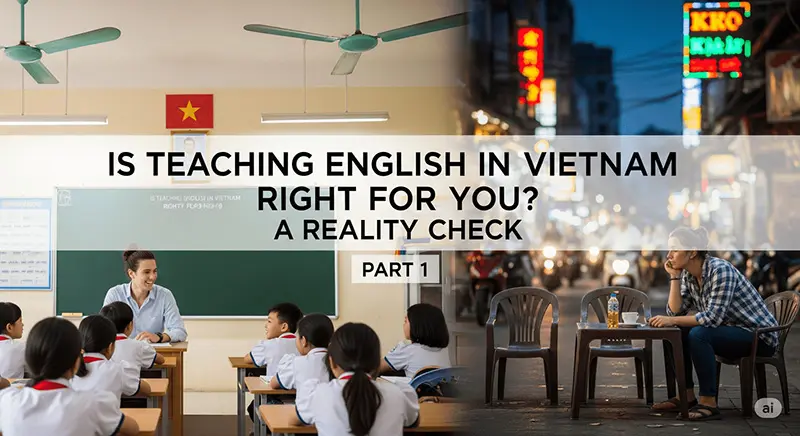
This is Part 1 of our comprehensive 16-part series: “The Complete Guide to Teaching English in Vietnam.” Over the coming weeks, we’ll take you from initial decision-making through landing your first job, navigating the legal requirements, and building a successful teaching career in Vietnam. Whether you’re a recent graduate, career changer, or seasoned teacher looking for adventure, this series will give you everything you need to make informed decisions about teaching in Vietnam.
So you’re thinking about teaching English in Vietnam? Maybe you’ve seen those Instagram posts of teachers sipping coffee by Hoan Kiem Lake or exploring the floating markets of the Mekong Delta. Vietnam has become one of the hottest destinations for English teachers, but before you book that one-way ticket to Saigon, let’s have an honest conversation about what teaching English in Vietnam is really like.
The Good: Why Vietnam is Amazing for English Teachers
Let’s start with why thousands of teachers fall in love with Vietnam. The cost of living is genuinely low – you can live comfortably on $800-1,200 per month while saving money and traveling extensively. A bowl of pho costs $1.50, a beer is $0.75, and you can rent a nice apartment for $300-500 monthly. Your dollar stretches far here.
The job market is robust. Vietnam’s economy is booming, and English proficiency is seen as essential for career advancement. From kindergarteners to business executives, everyone wants to learn English. This means steady work, with most teachers earning $18-25 per hour at language centers or $1,200-2,000 monthly at international schools.
Vietnamese people are incredibly welcoming to foreigners. Students are generally motivated and respectful, and you’ll find yourself invited to family dinners and local festivals. The expat community is tight-knit but not insular – you’ll make friends quickly while still experiencing authentic Vietnamese culture.
And then there’s the country itself. Vietnam is stunning and diverse. You can teach in bustling Ho Chi Minh City, historic Hanoi, or beachside Da Nang. Weekends might find you motorbiking through Sapa’s rice terraces, island-hopping in Ha Long Bay, or exploring ancient temples in Hue. The travel opportunities are endless and affordable.
The Reality Check: It’s Not All Motorbike Adventures
Now for the reality check. Teaching English in Vietnam isn’t a vacation with a paycheck, and it’s not for everyone.
First, the bureaucracy is real. Getting a work permit requires degree authentication, background checks, and medical certificates – a process that can take months and cost hundreds of dollars. Many teachers work on tourist visas initially, which means visa runs every three months and the constant stress of operating in a legal gray area.
The teaching itself can be challenging. Class sizes are often large (15-20 students), and you might teach 6-8 classes per day. Air conditioning is inconsistent, and you’ll be on your feet most of the day. Vietnamese students are generally well-behaved, but they’re also quiet and non-participatory by Western standards. Getting students to speak up requires patience and creativity.
Cultural adjustment is bigger than many expect. Vietnam is still a developing country with infrastructure challenges. Power outages happen, internet can be spotty, and traffic is chaotic (though you’ll learn to love it). The language barrier is significant – English isn’t widely spoken outside major cities and tourist areas.
Who Thrives Teaching English in Vietnam?
After interviewing dozens of successful teachers, certain personality types consistently do well here:
Adaptable people who can roll with the punches thrive. Plans change, schedules shift, and systems that work in your home country might not exist here. If you need everything to run like clockwork, Vietnam might frustrate you.
Social butterflies love the community aspect. Teaching in Vietnam is inherently social – you’ll work closely with Vietnamese co-teachers, attend school events, and build relationships with students’ families. Introverts can succeed too, but the social component is unavoidable.
Adventure seekers who want to experience a completely different culture do well. If you’re looking for Western amenities and familiar foods, you might be disappointed. But if you’re excited to try snake wine and learn to use chopsticks properly, you’ll love it.
The Financial Reality
Let’s talk money honestly. You won’t get rich teaching English in Vietnam, but you can live comfortably and save money – something many teachers can’t do in their home countries anymore.
Entry-level teachers at language centers earn $18-22 per hour for part-time work, usually 15-25 hours weekly. This translates to $1,200-2,200 monthly depending on your schedule. International schools pay $1,200-2,000 monthly for full-time positions with benefits.
Your biggest expenses will be accommodation ($300-500), food ($200-400), and transportation ($50-100). This leaves substantial room for savings and travel, which is why many teachers stay multiple years.
Making the Decision
Teaching English in Vietnam can be an incredible experience, but success depends largely on your expectations and personality. If you’re looking for adventure, cultural immersion, and the chance to make a real difference in students’ lives while living affordably, Vietnam could be perfect for you.
However, if you’re running away from problems at home, expect everything to work like it does in Western countries, or aren’t prepared for the challenges that come with living in a developing country, you might struggle.
The best advice? Come with an open mind, realistic expectations, and a sense of humor. Vietnam will challenge you, change you, and probably make you fall in love with both teaching and this incredible country.
What’s Next in This Series
If you’re feeling excited about the possibilities, you’re in the right place. This comprehensive series will walk you through every step of your Vietnam teaching journey:
- Part 2: Vietnam vs. Other ESL Destinations – Why Choose Vietnam?
- Part 3: TEFL, TESOL, or CELTA? Choosing the Right Certification
- Part 4: The Complete Document Checklist for Teaching in Vietnam
- Part 5: Where to Find English Teaching Jobs in Vietnam
- Part 6: Nailing the Interview and Landing Your First Position
And that’s just the beginning. We’ll cover work permits, contracts, classroom management, cost of living breakdowns, and advanced career development strategies.
About Teach English Vietnam
At Teach English Vietnam, we’re more than just another job board or information site. We’re your personal guides to successfully launching your teaching career in Vietnam.
Founded by experienced teachers who’ve navigated every challenge you’ll face, we provide personalized support that goes far beyond generic advice. We help match you with reputable schools that align with your goals, guide you through the visa and work permit process step-by-step, and offer ongoing support as you settle into life in Vietnam.
Unlike impersonal job boards, we focus on individual relationships. When you work with us, you get dedicated guidance tailored to your specific situation – whether you’re a recent graduate looking for adventure, a career changer seeking purpose, or an experienced teacher ready for a new challenge.
Our mission is simple: make your transition to teaching in Vietnam as smooth and successful as possible. We’re here to share our real-world experience and help you navigate this exciting journey with confidence.
Ready to explore your options? Contact us today to discuss how we can help you start your Vietnam teaching journey with confidence and clarity.
Continue following this series for everything you need to know about teaching English in Vietnam, and don’t hesitate to reach out with specific questions about your situation.


0 Comments