
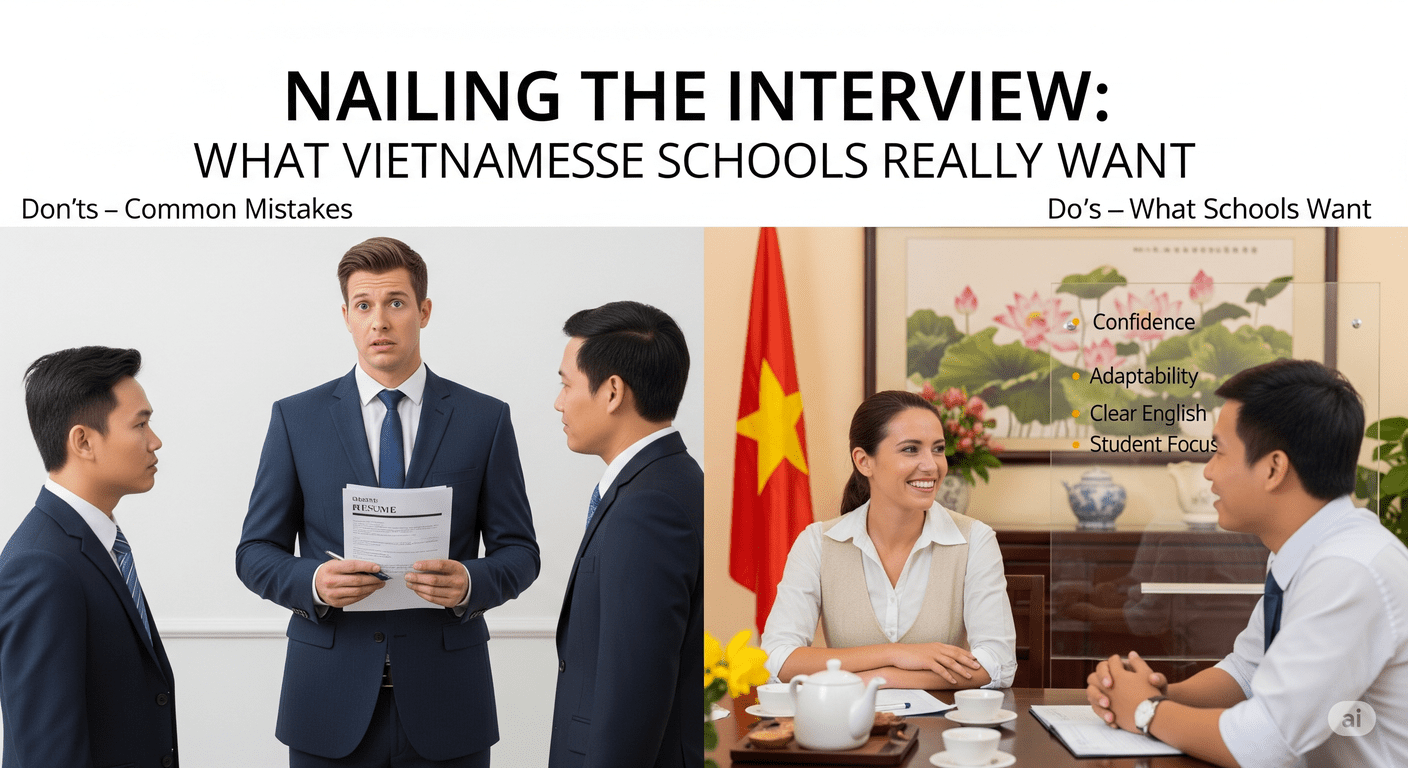
This is Part 6 of our comprehensive 16-part series: “The Complete Guide to Teaching English in Vietnam.” In Part 5, we explored where to find English teaching jobs in Vietnam and the best platforms for your search. Now it’s time to ace that interview and secure your position.
You’ve found promising job opportunities, submitted your applications, and now the interview invitations are coming in. Whether it’s a Skype call at 6 AM your time or an in-person meeting in Ho Chi Minh City, understanding what Vietnamese schools actually want from their English teachers is crucial to landing the job you want.
The interview process in Vietnam has its own unique characteristics, cultural expectations, and unspoken rules that differ significantly from Western job interviews. Schools aren’t just evaluating your teaching ability – they’re assessing whether you’ll thrive in Vietnamese culture, represent their institution well, and commit to staying longer than a few months.
Understanding the Vietnamese School Perspective
Before diving into interview tactics, it’s essential to understand what Vietnamese schools are really looking for and what concerns keep hiring managers awake at night.
Their Biggest Fears: Vietnamese schools have been burned by teachers who arrive unprepared, leave after a few months, or fail to adapt to local culture. They’re looking for teachers who demonstrate cultural awareness, flexibility, and genuine commitment to their students’ success.
What They Value Most: Reliability trumps everything else. A teacher with moderate qualifications who shows up consistently and adapts well to Vietnamese culture is infinitely more valuable than a highly qualified teacher who might disappear after three months.
The Cultural Lens: Vietnamese schools view teachers as important community members, not just employees. They want someone who will engage with the broader school community, show respect for Vietnamese customs, and serve as a positive cultural ambassador.
Pre-Interview Preparation: Setting Yourself Up for Success
Research the School Thoroughly Don’t just glance at their website. Understand their student demographics, teaching philosophy, and position in the local education market. Language centers, international schools, and public schools each have different priorities and expectations.
Understand Vietnamese Educational Culture Vietnamese education emphasizes respect for teachers, structured learning, and academic achievement. Schools want teachers who can work within this framework while bringing international teaching methods and perspectives.
Prepare Your Story Vietnamese interviewers love hearing about your journey and motivations. Prepare a compelling narrative about why you chose teaching, why Vietnam specifically, and how your background makes you perfect for their school.
Technical Setup for Online Interviews Most initial interviews happen via Skype or Zoom. Ensure excellent internet connection, professional lighting, and a clean background. Technical difficulties create negative first impressions that are hard to overcome.
The Interview Questions That Really Matter
“Why do you want to teach in Vietnam specifically?” This is the big one. They don’t want to hear about cheap beer and good weather. They want to know you’ve researched Vietnamese culture, understand the education system, and have genuine reasons for choosing Vietnam over other ESL destinations.
Strong answers mention Vietnam’s economic growth, the importance of English education in Vietnam’s development, cultural interest, or previous Southeast Asian experience. Show you understand Vietnam’s unique position and opportunities.
“How long do you plan to stay?” Be honest but strategic. If you’re genuinely planning to stay 1-2 years, say so. If you’re unsure, frame it as “I’m looking for a long-term opportunity where I can grow and contribute meaningfully.” Avoid mentioning this as a gap year or temporary adventure.
“How do you handle cultural differences?” They want specific examples, not generic statements about being flexible. Share experiences adapting to different cultures, learning new languages, or working in diverse environments. If you don’t have international experience, discuss how you’ve adapted to new situations in your home country.
“Describe your teaching philosophy.” Vietnamese schools appreciate teachers who can balance international teaching methods with respect for local educational culture. Mention concepts like student-centered learning, but also show you understand the importance of structure and respect in Vietnamese classrooms.
“How do you handle discipline and classroom management?” Vietnamese students are generally well-behaved but can be shy about participating. Schools want teachers who can encourage participation while maintaining the respectful classroom atmosphere that Vietnamese culture values.
The Subtle Cultural Cues That Make or Break Interviews
Dress and Presentation Conservative, professional attire is non-negotiable. Even for online interviews, dress as if you’re meeting the school principal in person. Vietnamese schools take appearance seriously as a sign of respect and professionalism.
Communication Style Speak clearly and avoid slang or overly casual language. Vietnamese interviewers may not catch subtle humor or cultural references. Be friendly but maintain professionalism throughout the conversation.
Showing Respect for Vietnamese Culture Demonstrate knowledge of basic Vietnamese customs, history, or current events. Even simple things like knowing that Vietnam uses the dong currency or mentioning Vietnamese holidays shows you’ve done your homework.
Questions About Salary and Benefits Handle these carefully. Let them bring up compensation first, or wait until they ask if you have questions. When discussing salary, focus on the total package including benefits, not just the base rate.
Red Flags Schools Watch For
The Backpacker Mentality Schools can spot teachers who view this as a temporary adventure rather than a professional opportunity. Avoid mentioning travel as a primary motivation or discussing your next destination.
Inflexibility Teachers who seem rigid about Western teaching methods or unwilling to adapt to Vietnamese educational practices are immediate red flags. Show openness to learning their systems and approaches.
Unrealistic Expectations Don’t expect Western salaries, classroom resources, or administrative efficiency. Schools want teachers who understand they’re coming to Vietnam to work within Vietnamese systems, not to recreate Western classrooms.
Cultural Insensitivity Even subtle hints that you view Vietnam as backward or less developed than your home country will end the interview quickly. Approach Vietnam as different, not inferior.
Questions You Should Ask Them
About Professional Development: “What opportunities exist for teacher training and professional growth?” This shows you’re thinking long-term and want to improve your skills.
About Student Support: “What resources are available to help students who are struggling?” This demonstrates you care about student success beyond just showing up to class.
About School Culture: “How does the school support teachers in adapting to Vietnamese educational culture?” This shows cultural awareness and desire to integrate successfully.
About Practical Matters: “What support does the school provide for visa processing and work permits?” This is practical and shows you understand the legal requirements.
Different Interview Styles by School Type
International Schools These interviews are most similar to Western job interviews. Expect detailed questions about curriculum, teaching methodologies, and educational philosophy.
Language Centers Focus on adaptability, customer service orientation, and ability to make learning engaging. They want teachers who can keep adult students motivated and coming back.
Public Schools Emphasize cultural sensitivity, patience, and ability to work within structured systems. These schools value teachers who can support Vietnamese teachers rather than replace them.
Universities Academic credentials matter more here. Be prepared to discuss your educational background, research interests, and ability to teach higher-level English skills.
Closing the Interview Strong
Express Genuine Interest End with specific reasons why you want to work at their school, not just in Vietnam generally. Reference something from your research or conversation that particularly appealed to you.
Confirm Next Steps Ask about their timeline for decisions and when you might expect to hear back. This shows professionalism and helps you manage other opportunities.
Show Appreciation Thank them for their time and for sharing information about their school. Vietnamese culture values courtesy and proper expressions of gratitude.
After the Interview: Following Up Professionally
Send a brief thank-you email within 24 hours, reiterating your interest and highlighting key points from your conversation. Keep it concise but personal, referencing specific details from your discussion.
If you don’t hear back within their stated timeline, one polite follow-up email is appropriate. Vietnamese schools sometimes take longer to make decisions than Western employers, so patience is important.
Common Interview Mistakes That Cost Jobs
Being Too Casual Treating the interview like a friendly chat rather than a professional evaluation. Vietnamese schools appreciate warmth but expect professionalism.
Focusing Only on Personal Benefits Talking primarily about what Vietnam offers you rather than what you offer their students and school.
Showing Impatience with the Process Vietnamese decision-making can be slower than Western standards. Showing frustration or pushing for quick decisions creates negative impressions.
Inadequate Preparation Not researching the school, city, or Vietnamese education system shows lack of genuine interest and professionalism.
What Success Looks Like
A successful interview should feel like a mutual exploration of fit rather than an interrogation. You should leave feeling like you understand their needs and they understand your value. The best interviews involve natural conversation where both parties are asking questions and sharing information.
Remember that Vietnamese schools want teachers who will succeed and stay. They’re rooting for you to be the right fit because hiring and training teachers is expensive and time-consuming. Approach the interview as a collaborative process of determining mutual fit rather than a test you need to pass.
The Decision-Making Timeline
Vietnamese schools typically take 1-2 weeks to make hiring decisions, sometimes longer for international schools. This isn’t necessarily a negative sign – thorough deliberation is common in Vietnamese business culture.
Some schools may want to interview multiple candidates before deciding, especially if they’re hiring for multiple positions. Others may offer positions quickly if they’re impressed and have urgent needs.
What’s Next in This Series
Now that you know how to nail your interview and understand what Vietnamese schools really want, it’s time to tackle the legal requirements. In Part 7, we’ll dive into “Vietnam Work Permit Guide: Step-by-Step Process for English Teachers” – because getting your paperwork right is crucial for long-term success.
We’ll also cover:
- Part 8: Understanding Your Contract and What to Negotiate
- Part 9: Your First Month Teaching in Vietnam
- Part 10: Classroom Management Tips That Actually Work
- Part 11: Ho Chi Minh City vs Hanoi vs Da Nang: Choosing Your Base
About Teach English Vietnam
At Teach English Vietnam, we’re more than just another job board or information site. We’re your personal guides to successfully launching your teaching career in Vietnam.
Founded by experienced teachers who’ve navigated every challenge you’ll face, we provide personalized support that goes far beyond generic advice. We help match you with reputable schools that align with your goals, guide you through the visa and work permit process step-by-step, and offer ongoing support as you settle into life in Vietnam.
Unlike impersonal job boards, we focus on individual relationships. When you work with us, you get dedicated guidance tailored to your specific situation – whether you’re a recent graduate looking for adventure, a career changer seeking purpose, or an experienced teacher ready for a new challenge.
Our mission is simple: make your transition to teaching in Vietnam as smooth and successful as possible. We’re here to share our real-world experience and help you navigate this exciting journey with confidence.
Ready to explore your options? Contact us today to discuss how we can help you start your Vietnam teaching journey with confidence and clarity.
Continue following this series for everything you need to know about teaching English in Vietnam, and don’t hesitate to reach out with specific questions about your situation.


0 Comments